Trumpeter Flores, Mexican orchestra serve up a lively evening at Kravis
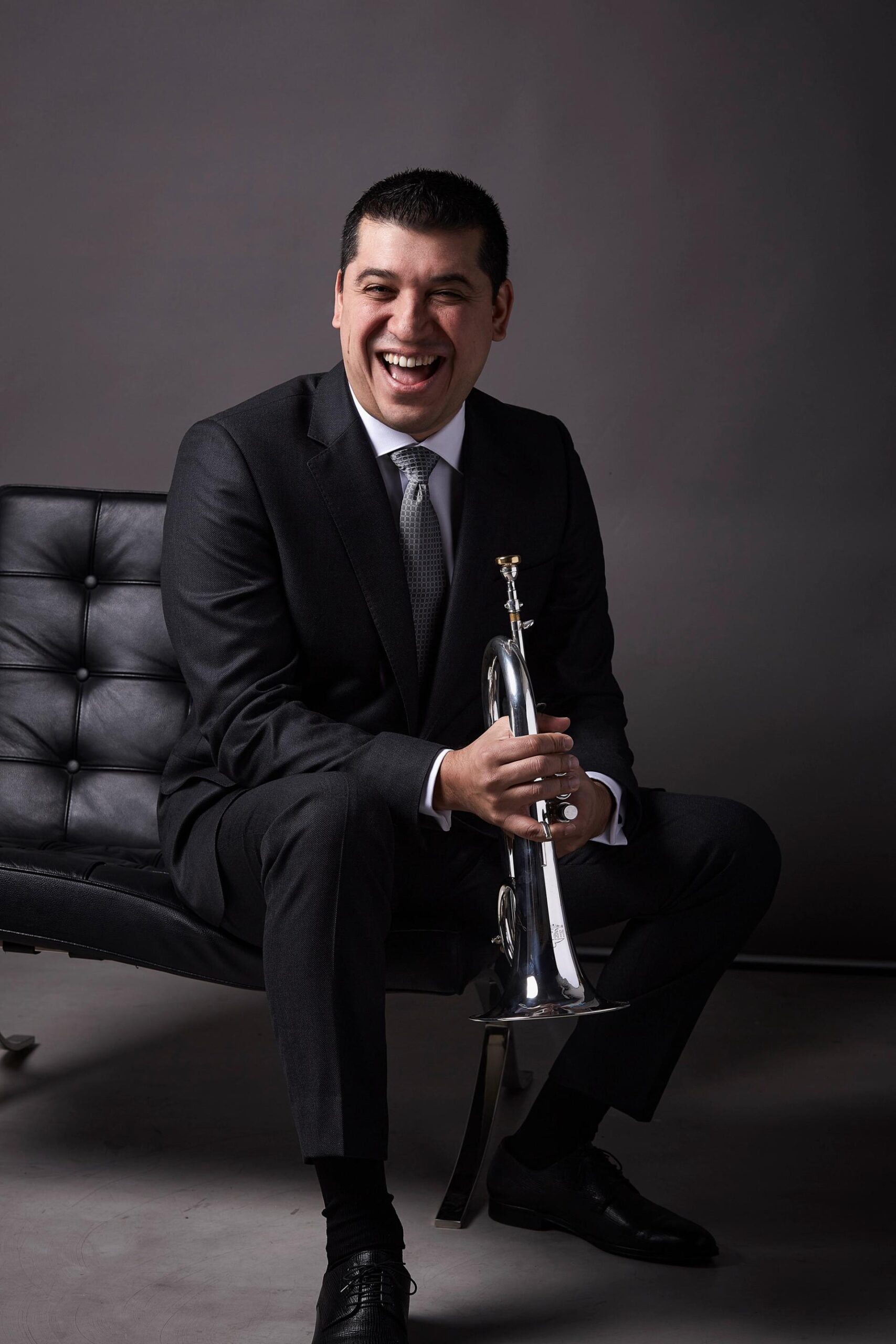
Pacho Flores performed trumpet concertos by Haydn and Paquito d’Rivera with the Orquesta Sinfónica de Minería Friday night at the Kravis Center in West Palm Beach.
The trumpet virtuoso Pacho Flores, a product of Venezuela’s famous El Sistema orchestra, put in a busy night of work Friday at the Kravis Center in West Palm Beach.
Appearing as soloist with Mexico City’s Orquesta Sinfónica de Minería, he played two substantial works, Haydn’s Trumpet Concerto and the Concerto Venezolano by the contemporary Cuban-American composer Paquito d’Rivera.
The orchestra, which excelled across a wide range, from Haydn to pop-infused Latin American compositions, put on more of a show than most symphonic ensembles. There were shoutouts in mid-performance to soloists after a particularly impressive passage, calls from music director Carlos Miguel Prieto for anyone in the audience from Venezuela to cheer (some) and the same for Mexico (lots) and Cuba (about like Venezuela). A large Mexican flag was unfurled by one of the musicians at the end of the performance.
Before the concert, six trumpets of various sizes lay on a padded bench on stage, a sufficient number, presumably, to get Flores through both concertos. But apparently not. He carried two more trumpets on stage with him, as he walked out to deliver a spirited, almost romantic account of the Haydn concerto.
Technically polished and tonally immaculate, his performance of the opening Allegro was never staid or stiff. Throughout, he enlivened the movement with a rich vibrato and dramatic changes in dynamics. In the simple melody of the Andante, he luxuriated like an operatic tenor in long-held high notes.
The last movement, taken at particularly high speed, was a showstopper of virtuosity. Toward the end, the Kravis Center’s sound system suddenly came to life and blasted a horrifyingly loud electronic noise through the hall. But this didn’t put the musicians off their game, as they launched into the final passages, with Flores blazing through the fast broken octaves at the end.
Based in Mexico City, the orchestra takes its name from the city’s Palacio de Minería, or Hall of Mining, the historic building where it was founded. After its opening nod to classical music’s European heartland, the orchestra shifted to the music of Latin America.
Paquito d´Rivera composed Concerto Venezolano for Flores, who played the world premiere in 2019 in Mexico City. Joining the trumpeter at the front of the orchestra was Héctor Molina, a virtuoso on the cuatro, a four-stringed Venezuelan instrument that looked like a small guitar.
From its dark opening, with a drum roll, foreboding wind and brass music and an improvisatory flourish by the trumpeter, the one-movement concerto sounded at first like a contemporary version of a heroic 19th century concerto.
But it quickly adopted a jazzier, nightclub tone, with Flores playing a long voluptuous melody over plucked notes in the basses. The rhythms picked up the pace, the harmonies became more modern and astringent, and Flores played faster and faster, as the opening melodies developed in complexity and intensity.
The long, sultry melodies, based on Latin American dances such as merengue and danzón gave the music a pop feel. With its melodic richness and rhythmic drive, the work was accessible and absorbing. Particularly effective was the danzón, for which Flores chose a large trumpet that approached the French horn in tone, playing the smoky melody with a velvety tone and expressive phrasing.
The cadenza was different in every performance, the conductor said. Here Flores and Molina, appeared to improvise around a structure that led to a big crescendo and an extended climax. In a cadenza within the cadenza, Molina plucked and strummed with rising rapidity, volume and intensity, filling the hall with surprising musical power for such a small instrument, leading the trumpet player to shout his name and gesture for a round of applause, an honor he would repeat for the bass player and percussionist.
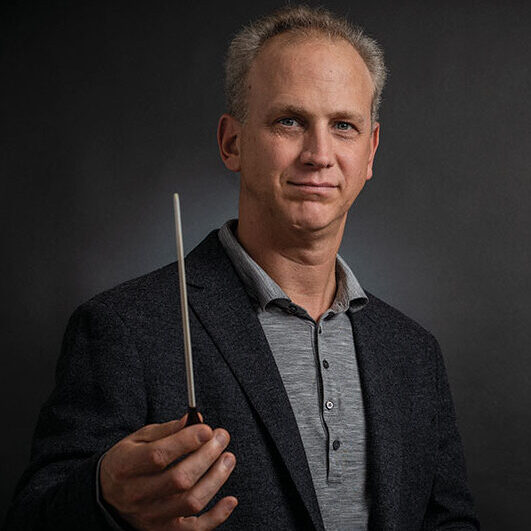
Carlos Miguel Prieto conducted the Orquesta Sinfónica de Minería Friday night.
The second half opened with a short tone poem called Sensemayá by Silvestre Revueltas, a Mexican violinist and composer who lived in the first half of the 20th century. Inspired by a poem about the ritual killing of a snake in Afro-Cuban religion, the work provided an engrossing few minutes of music. Beginning in the lower winds, the work grew in volume and force over insistent drumming that enhanced its ritual tone.
The music moved south for Four Dances from Estancia by Alberto Ginastera, Argentina’s best-known composer. Based on a ballet set in the cowboy culture of the Argentinian Pampas, the work consisted of a suite of four dances.
The orchestra here sounded particularly well-rehearsed, playing with a taut precision that effectively brought off these highly rhythmic dances. Passages of brass and percussion expressed the rough world of the cattle-herding gauchos. In a section called the “Dance of Wheat,” there was delicate flute music and a soaring string melody. The final section brought a long crescendo of hard-driving rhythms, full of percussion and brass, to the work’s fortissimo ending.
The program concluded with Danzón No. 2 by the Mexican composer Arturo Márquez, a 1994 work that has grown hugely popular among North American audiences. Prieto led the orchestra through a supple, nuanced, lustrous performance, with sudden pianissimos leading to long crescendos, as various instrumental and harmonic changes gave growing weight and vigor to the sensual melody.
The Kravis Center’s classical series continues 2 p.m. Saturday with the Royal Philharmonic Orchestra conducted by Vasily Petrenko in Nielsen’s Helios Overture, Sibelius’s Symphony No. 2 and the Tchaikovsky Violin Concerto with soloist Ray Chen. kravis.org
Posted in Performances
Leave a Comment
Sat Jan 17, 2026
at 11:03 am
No Comments











 Subscribe via RSS.