Bell and the Academy prove simpatico partners at Arsht
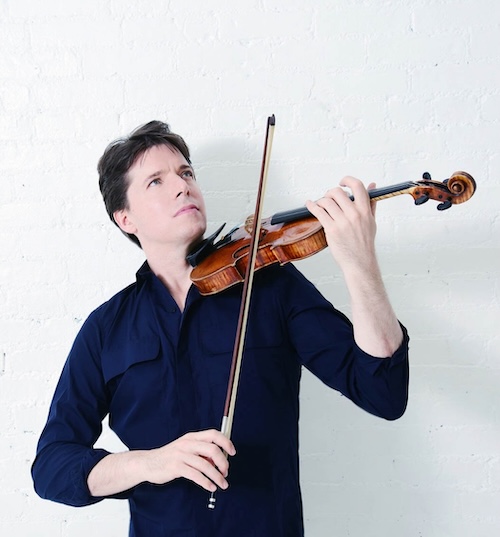
Joshua Bell performed and led music of Saint-Saëns, Schumann and Ives with the Academy of St. Martin in the Fields Saturday night at the Arsht Center.
The Academy of St. Martin in the Fields graced the Arsht Center stage on Saturday evening, led by music director Joshua Bell. Bell directed the orchestra from the concertmaster’s seat, a tradition from the early years of his predecessor, the orchestra’s founder Sir Neville Marriner.
The concert, which wrapped up Arsht’s classical season, opened with Variations on “America” by Charles Ives. One of the maverick composer’s earliest notated pieces, it was originally written for organ, for the composer himself to play. On this occasion it was presented in a brand-new arrangement for chamber orchestra by British composer Iain Farrington.
While the lucid scoring might seem at odds with Ives’s wilder tendencies, it also lent a certain domestic humbleness that suits his music well and that played to the ensemble’s signature strengths. The orchestra played impeccably and unpretentiously, capturing the essence of a piece Ives said was “almost as much fun as playing baseball.”
Bell stepped out as soloist for Camille Saint-Saëns’ Violin Concerto No. 3. Written in 1880, this concerto ranks among the French composer’s most celebrated works.
Bell displayed a startling command of the instrument through the work’s technical minefields. What was more impressive, however, was the musical maturity he showed. His liquid bel canto rolled through the first movement, and the whistle-register high notes in the finale came out with laser-like clarity. The second movement was full of melodious charm, though the performance sometimes ran the risk of becoming heavy, with predictable swells on each downbeat. Overall, Bell’s theatrical personality served Saint-Saëns’ concerto well..
There were some awkward moments in the more operatic passages of the first movement due to Bell’s double duty as both conductor and soloist. However, in other passages the ensemble’s conductor-less tradition was clearly an advantage, allowing for an impressive unity of expression difficult to achieve otherwise.
The concert concluded with Robert Schumann’s “Spring” Symphony in B flat Major. Schumann’s first fully-fledged orchestral work, the symphony has enjoyed a mixed reception over the past two centuries, with commentators celebrating its intense expression and originality and criticizing its perceived structural and scoring deficiencies.
Under Bell’s direction, however, it came across as masterful.
The ensemble’s polish in the first movement served as a solid backdrop to highlight the symphony’s eccentricities. The orchestra utilized Schumann’s offbeat scoring choices to showcase the work’s rough personal qualities. Thick strings and a fat brass sound in the opening melody and elsewhere imparted a convincing folk character.
A heartfelt lyricism carried the second movement along, and the orchestra jumped confidently into the various dance-like themes of the third movement. The horn and flute solos in the finale were particularly charming. Especially in the final movement, the Academy’s consummate craft shone as they inhabited Schumann’s distinctive sound world.
Posted in Performances
Leave a Comment
Sun Mar 15, 2026
at 4:05 pm
No Comments


 Subscribe via RSS.