A scary moment apart, Welser-Möst leads Cleveland Orchestra in a memorable Verdi Requiem
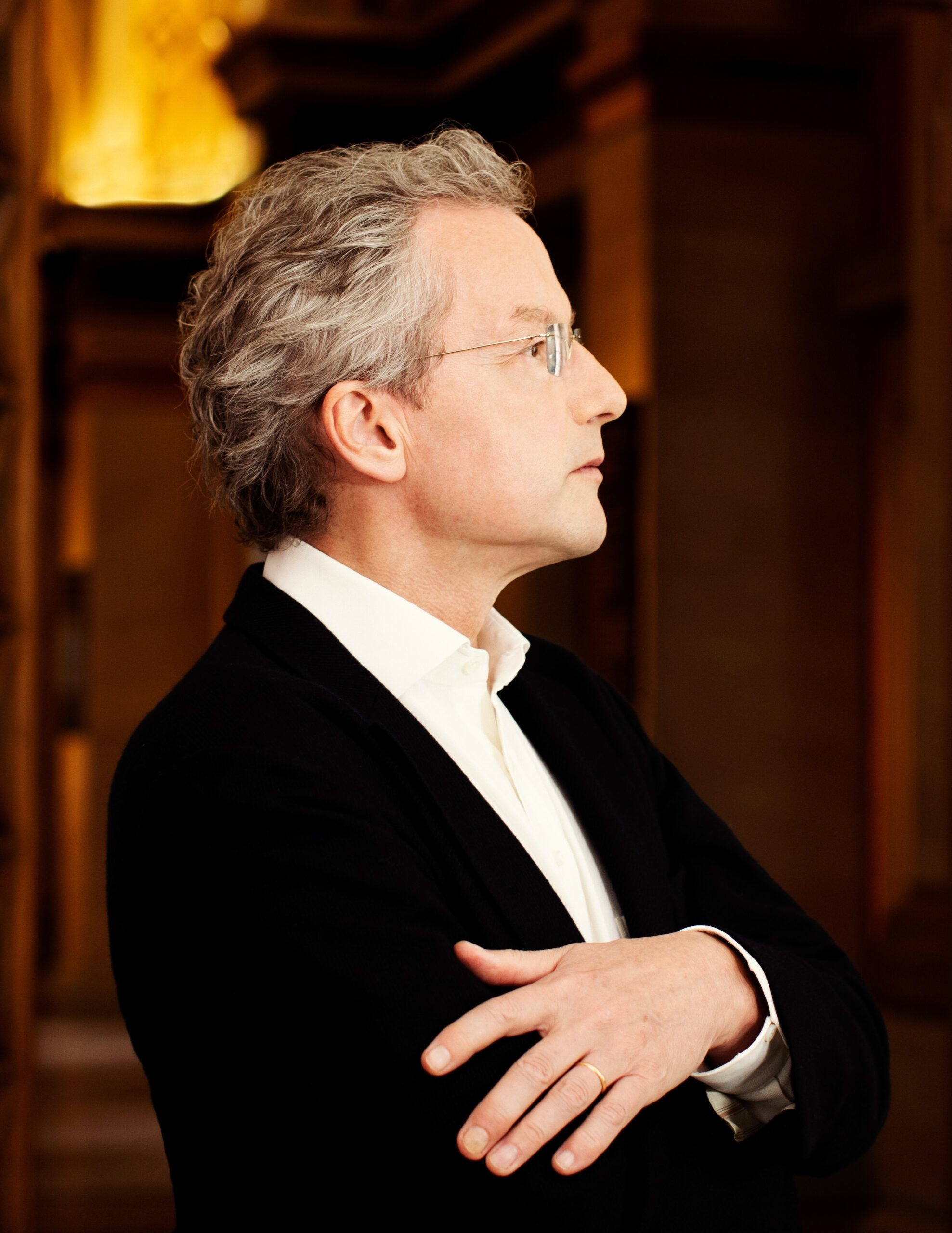
Franz Welser-Möst conducted the Cleveland Orchestra and Chorus in Verdi’s Requiem Friday night at the Arsht Center. Photo: Julia Wesely
Giuseppe Verdi’s Messa da Requiem is one of the great choral-vocal works in the Western musical canon. A sacred opera in everything but name, Verdi’s setting of the mass for the dead requires top choral and orchestral execution, a stellar quartet of vocal soloists, and a conductor who can bring focus and coherence to Verdi’s sprawling opus.
On Friday night, the Cleveland Orchestra and Chorus and outstanding solo vocalists under Franz Welser-Möst’s direction met the score on its own terms at the Arsht Center. There were also some moments of personal drama that threatened to derail the performance but, ultimately, failed to dull its impact.
From the first bars of the “Requiem and Kyrie,” Welser-Möst sustained musical tension and built the long arc of the work in riveting fashion. Under choral director Lisa Wong, the chorus was unified and balanced with a range of dynamics that veered from the edge of audibility to full-voltage outbursts that echoed through the hall. Even at top volume, the group’s corporate sound was never harsh or jarring. Welser-Möst roused his forces to the fury and terror of the “Dies Irae,” with unrelenting tension. Extra trumpets in the balcony added to the voluminous onslaught. Yet, at all times, the orchestral and vocal ensemble was superbly controlled and coordinated.
The vocal quartet was nothing short of world class. Lithuanian soprano Asmik Grigorian has received plaudits for her singing on major opera stages and it was easy to hear why. Her soaring top notes rang without strain while her pianissimos sounded exquisitely. Grigorian’s voice is even and solid without any audible break in registers. The score’s final “Libera me” section is a virtual scena for soprano and chorus. Her opening recitative, a plea for mercy, emerged both dramatic and fervent.
Turkish-German mezzo Deniz Uzun’s richly textured articulation and plush sound are matched by a superb sense of Verdian line and phrase. Her solid lower register is firm, the voice bereft of foggy intonation. In the melodic arcs of the duet “Recordare, Jesu pie,” Uzun’s sumptuous mezzo and Grigorian’s delicately hued soprano blended winningly.
Joshua Guerrero showcased a lyric tenor of strength with soft, caressing tones in the “Ingemisco” solo. The Mexican-American tenor could ring the hall but he never overpowered his fellow soloists in quartet sections and exhibited subtlety and taste in solo moments. Bass Tareq Nazmi’s bold declamation, mellow low notes and rounded tone commanded attention at his every utterance, particularly in the “Confutatis maledictus” aria.
Following the “Offertorio,” the Requiem’s third section and halfway point, Welser-Möst sat down on the podium, his head in his hands. A violinist rushed offstage and brought a stagehand out with a bottle of water which the conductor drank. After sitting for several minutes, he rose and took the podium again to applause, immediately launching into the “Sanctus.” The vigor and incisive attacks captured the lightness and joy of this choral movement.
Despite the conductor’s apparent indisposition, the performance’s momentum remained unabated. Welser-Möst expertly managed the tricky balancing of mezzo, tenor and bass in the “Lux Aeterna,” and the forthright vocalism matched the beauty of orchestral playing. The repeat of the “Dies Irae” music in the concluding “Libera me” sounded even more taut and fierce. Taken at a brisk pace, the ensuing choral fugue featured clear and transparent textures. Grigorian’s final soft lines capped a stunning performance that fully delivered the drama and lyricism of Verdi’s conception.
At the conclusion, Welser-Möst embraced each of the soloists and joined them in bowing to the audience’s standing, cheering ovation but he did not take any curtain calls. It was left to choral director Wong to motion for the chorus and orchestra to rise and join the soloists in repeatedly returning to the stage.
One hopes Welser-Möst will be well enough to lead Saturday night’s repeat performance. Lovers of Verdi and choral and vocal music should not miss the opportunity to hear this masterpiece in a deeply committed, first-class reading.
The Cleveland Orchestra repeats Verdi’s Requiem 8 p.m. Saturday at the Arsht Center in Miami. arshtcenter.org
Posted in Performances
One Response to “A scary moment apart, Welser-Möst leads Cleveland Orchestra in a memorable Verdi Requiem”
Leave a Comment
Sat Jan 24, 2026
at 11:30 am
1 Comment



 Subscribe via RSS.
Posted Jan 24, 2026 at 12:57 pm by Janet Wyatt
What a wonderful article that truly captured the evening. My husband and I drove from Sarasota for this performance as we worked on completing our “Bucketlist” of the world’s orchestral masterworks.
Your descriptions were spot on and we hope that Maestro Welser-Most recovers to perform again. His is a special talent.
Thanks so much for helping us remember this special evening with your writing talents.