Royal Philharmonic impresses while violinist Chen brings the show-biz
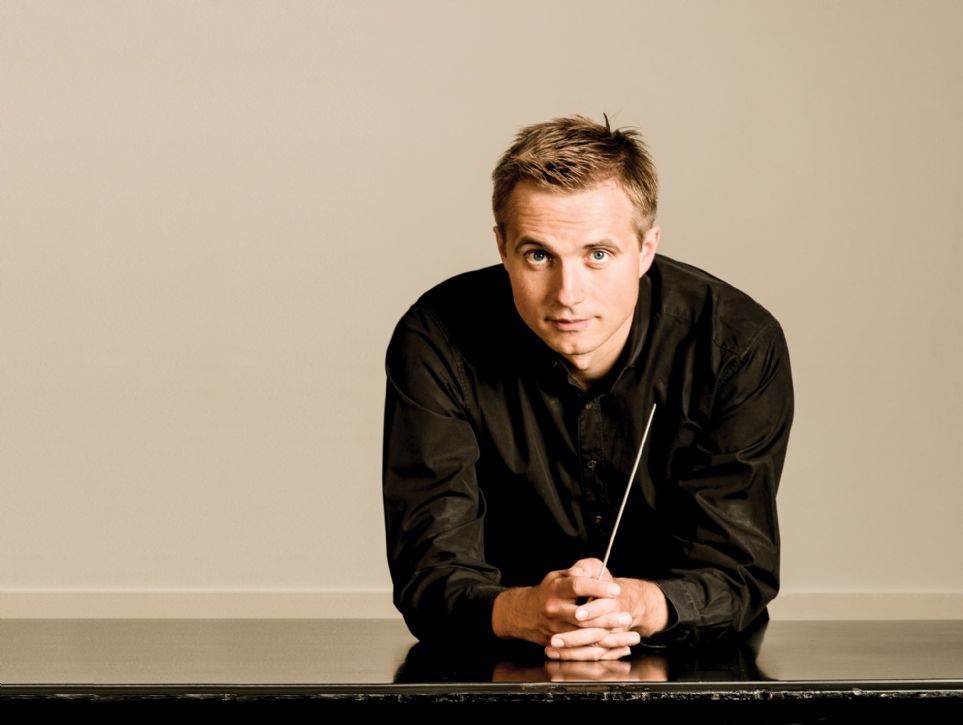
Vasily Petrenko conducted the Royal Philharmonic Orchestra Saturday at the Kravis Center in West Palm Beach.
The violin virtuoso Ray Chen has blazed an original trail in the classical world, becoming a YouTube star, creating an app for young musicians and recording tunes from Japanese video games.
But in an appearance Saturday in West Palm Beach with the Royal Philharmonic Orchestra, his repertoire choice was decidedly cautious, Tchaikovsky’s great, popular and overplayed Violin Concerto.
Chen put an original stamp on the concerto in ways good and bad, in an interpretation that showcased his fearless virtuosity. He made much more of the cadenza-like solo opening than do many violinists, infusing it with unusual intensity and drama. But he also overwhelmed melodic passages with a buzzy vibrato and a tendency to overemphasize certain notes, not allowing the music to breathe and speak for itself.
His virtuosity was unquestionable, as he tossed off the energetic runs and triplets that give the concerto so much of its popularity. And he did this in the fearless manner of someone who wasn’t worried about hitting a wrong note or two, not that he had many of those. But there was a lot of crunchy bow noise, an unvarying intensity to his tone and physical flamboyance that made the first movement feel like an extended showpiece rather than one of Tchaikovsky’s great works.
In the second movement Canzonetta, however, he seemed to tone down the non-stop intensity to express the music’s poignance with liquid phrases, smooth bowing and a sense of the long musical lines. His aggressive style suited the last movement just right, as he roughened his tone to fit the earthy music, zipping through runs with crisp precision and a rustic tone.
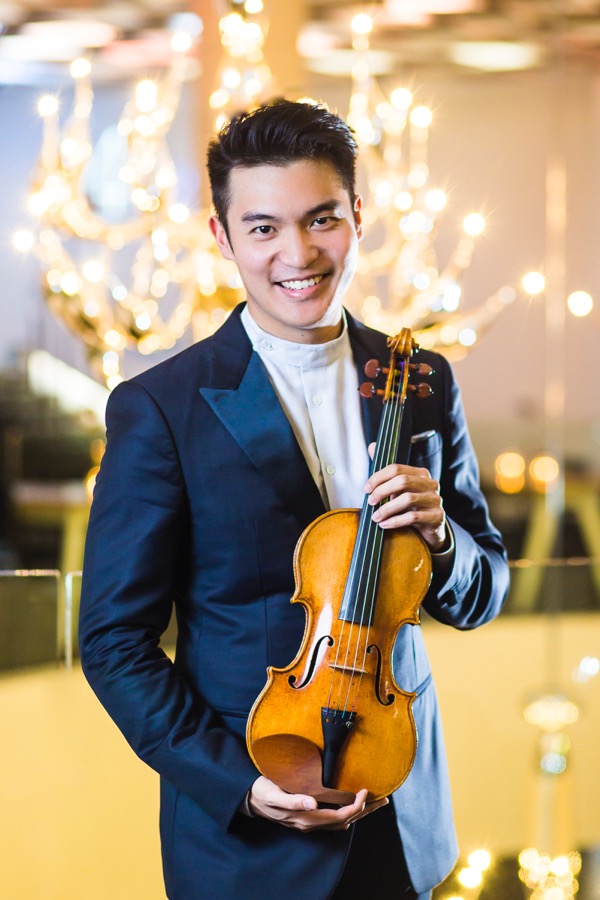
Ray Chen performed Tchaikovsky’s Violin Concerto with the RPO on Saturday.
Under music director Vasily Petrenko, the orchestra did its part in a straightforward manner, with full-bodied tuttis and a blazing performances of fast passages in the last movement.
Although born in Taiwan, Chen was raised in Australia, and as an encore, he played his own arrangement of the Australian song “Waltzing Matilda,” giving it the full virtuoso treatment, with chords, runs and artificial harmonics, producing something Paganini might have written if he’d grown up in Perth.
The concert opened with the Helios Overture by the Danish composer Carl Nielsen, a 1903 work inspired by the composer’s observation of the rising and setting sun on a visit to Athens.
There have been many musical depictions of sunrise, and this one was effectively literal. Opening with soft, long-held notes in the orchestra’s excellent horn section and ascending figures in the violins, leading to shining passages in the trumpets.
After intermission, the orchestra returned for the Sibelius Symphony No. 2, the first work on the program that would really show this excellent orchestra’s full range.
Despite the rich orchestration, passages that seemed to express the composer’s Nordic sensibility came through with piercing clarity. The symphony wasn’t all icy transparency, of course, and the orchestra gave eerie accounts of darker, murky passages in lower strings and woodwinds.
Petrenko led a well-paced, weighted performance, with wide dynamic expanses, sweeping crescendos and rich brass passages that left none of the drama understated. Strings played with clarity and buoyancy in the bucolic opening. One element that gives a unique tone to Sibelius’ orchestral music is his prominent use of the lower winds, these sections played with rich, warm tones at some moments, craggy remoteness the next.
Petrenko took an unhurried tempo in the Andante, letting the timpani rolls, roaring brass and sudden rests carry full power. The last movement contains one of Sibelius’ most striking orchestral passages, a pensive running figure in violas and cellos that supports a tense melody in the winds. In this performance, it pulsed with dark, understated energy and tonal luster. Petrenko led a crescendo that reached the movement’s climactic, affirmative ending, with strings soaring in their big melody with pealing brass notes.
In response to a standing ovation, Petrenko led the orchestra through two smoothly dispatched encores. They gave a vernal, sweet-toned account of “Morning Mood” from Grieg’s Peer Gynt, one of those tunes that everyone knows, whether they think they know any classical music or not.
The Royal Philharmonic Orchestra repeats the program 7:30 p.m. Sunday at the Arsht Center in Miami. arshtcenter.org
The Kravis Center’s classical series continues Feb. 1 with the Cleveland Orchestra conducted by Franz Welser-Möst in Mozart’s Symphony No. 41 and Shostakovich’s Symphony No. 11. kravis.org
Posted in Uncategorized
One Response to “Royal Philharmonic impresses while violinist Chen brings the show-biz”
Leave a Comment
Sun Jan 18, 2026
at 5:48 am
1 Comment


 Subscribe via RSS.
Posted Jan 18, 2026 at 9:51 am by Clare Goyette
The performances were stellar!