Tenor Flórez shines brightly in a triumphant return to Miami
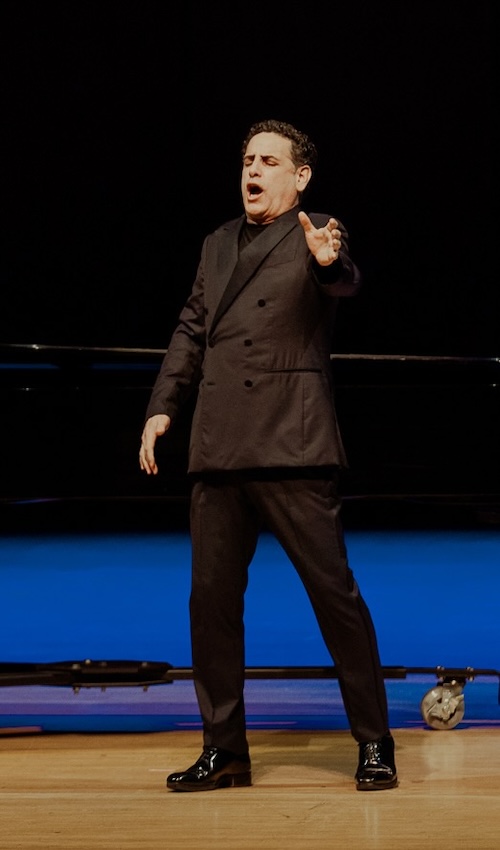
Juan Diego Flórez performed a recital Sunday night at the Arsht Center in Miami. Photo: Taylor Brown
There are many fine singers who regularly perform on the world’s major operatic stages, but there are a few that remain in a class of their own.
Juan Diego Flórez belongs in that league. On Sunday night, the Arsht Center classical music series presented the Peruvian tenor in recital and the occasion proved nothing less than a night of great singing.
Making his first Miami appearance since 2007, the tenor offered a varied program that mixed Italian art song with arias from the bel canto operatic repertoire plus snippets of the more romantic roles he has recently done and zarzuela arias.
For voice students and aspiring singers in the audience, Flórez’s vocalism throughout the evening was a veritable master class in secure vocal technique and tasteful interpretive projection. His lyric tenor is marked by sweetness of timbre, a ringing high register bereft of strain, and nuanced expression devoid of vocal histrionics. Veteran operatic accompanist Vincenzo Scalera was his astute partner and shone in several piano solos, giving the tenor a respite between sets.
Flórez has specialized in the bel canto roles of operas by Rossini, Bellini and Donizetti and the first half of his program featured songs and arias by those composers. Flórez’s nobility of phrasing and depth of feeling was immediately on display in Rossini’s “Le sylvain,” his opening selection. Three songs by Bellini further illustrated the tenor’s unique vocalism. “Malinconia ninfa gentile” was bathed in meltingly beautiful legato lines. Flórez molded “Vanne, o rosa fortunata” in one long, uninterrupted melodic arc. His purity of sound turned “L aricordanza” into one of the evening’s highlights. Scalera followed this gem with Carl Czerny’s arrangement of Bellini’s “Almen senon possi’io,” rendered with elegance and grace.
Florez’s agility took center stage in two Donizetti selections. Flawless coloratura and perfectly placed trills were buttressed by fervor and squillo for “Ah! Rammenata, o bella Irene.” An excerpt from Roberto Devereux, the final opera in Donizetti’s Queen trilogy, found Flórez at his zenith. Following his natural approach to the opening recitative, the aria “Come uno spirito angelico” resounded in golden hues, capped by a vigorous cabaletta that rang the house.
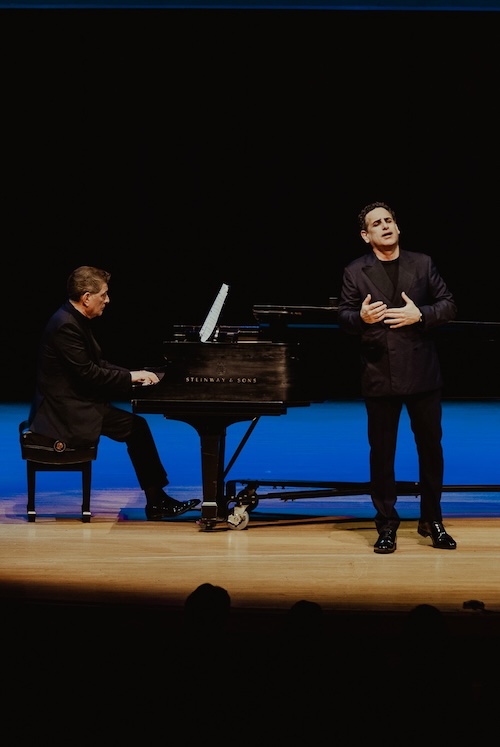
Juan Diego Florez performed with pianist Vincenzo Scalera Sunday night. Photo: Taylor Brown
When Flórez returned after intermission, he assayed three selections from Spanish zarzuelas, offering the kind of quality singing infrequently heard in this populist repertoire. “Bella enamorada” from El utimo romantico by Saoutullo and Vert was sung with intimate expression. Flórez’s exquisite mezzo voce brought subtlety to “Suena, guitarricomio” from Soriano’s El guitarrico, with gestures imitating a guitar player. A robustly vocalized “Aqui está quien lo tiene” from Serrano’s La alegria del batalón concluded the zarzuela group on a high note in more ways than one. Scalero’s stylish interlude of Ernesto Lecuona’s Mazurká Glisasando was given lilt and verve, illustrating the European side of the Cuban composer.
Turning to French opera, Flórez fully encompassed the distinctive Gallic vocal lightness of sound in music by Massenet and Gounod. Rodrigue’s prayer “O souverain, o juge, o pére” fromthe former’s Le Cid was distinguished by soft, dulcet articulation. “Salut! Demeure chaste et pure,” Faust’s idyll of love from Gounod’s opera brought out Flórez’s emotional side, his tone remaining beautiful. He finally let loose with an impassioned “Che gelida manina” from Puccini’s La Boheme, demonstrating his versatility and recent explorations into heavier opera roles beyond bel canto.
The enthusiastic and excitable audience was not about to let Flórez go without encores and he responded very generously. For starters, he offered the showpiece aria “Ah mes amis” from Donizetti’s La fille du regiment. The nine high C’s held no terrors for him, emerging clear as a bell.
A stagehand then brought out a chair and Flórez returned with his guitar, sat down and offered no less than three selections, accompanying himself. Ernesto di Capua’s Italian standard “T te vurria vasa” was sung with folk-like intimacy. Three songs by Chabuca Granda ranged from the love tinged “La Flor de la canela” to the vigor of “Fina estampa.” No one has sung “Cucucuracucú paloma” by Tomas Méndez with the lovely tone that Flórez commands.
Scalera then returned to the keyboard and joined Flórez to conclude the evening with a vibrantly sung “Amapola,” a 1920’s pop song by Joseph Lacalle. The song was once recorded by Tito Schipa, a great Italian tenor of the late 1910 to the 1950’s. Like Schipa before him, Flórez is nonpareil among lyric tenors. His concert was a joy to experience.
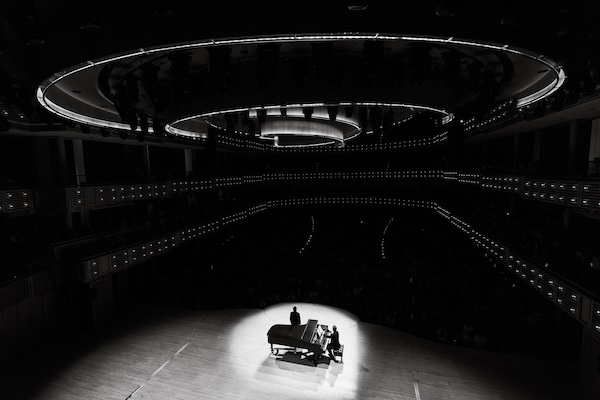
Photo: Taylor Brown
Posted in Performances
Leave a Comment
Mon Feb 16, 2026
at 12:21 pm
No Comments


 Subscribe via RSS.