Denève leads New World in radiant song-cycle and brilliant Ravel at Arsht
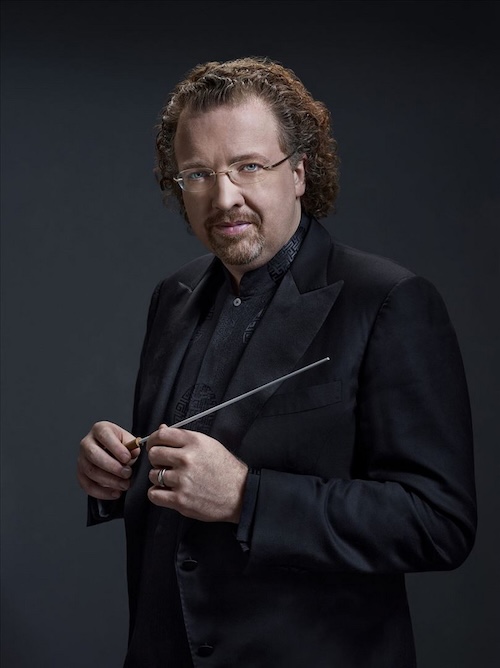
Stéphane Denève conducted the New World Symphony in music of Ravel and Lieberson Saturday night at the Arsht Center.
Impressionistic magic was the order of the evening on Saturday as Stéphane Denève led the New World Symphony in an important 21st-century song cycle and a rarely heard version of a famous score at the Arsht Center. The splendid mezzo-soprano Kelley O’Connor added glamour and luster to the proceedings.
Neruda Songs by American composer Peter Lieberson has its own tragic history. Lieberson wrote the five-movement work for his wife Lorraine Hunt Lieberson who sang the premiere in 2005. She would die of breast cancer the following year. Five years later, the composer himself passed away from complication of lymphoma.
Lieberson’s creation is nothing short of a masterpiece. His setting of five love poems by Pablo Neruda brims with beautiful invention, beguiling vocal writing and vivid instrumental effects. Touches of Andalusian color infuse the orchestral sonorities of “If your eyes were not the color of the moon,” the opening song. O’Connor’s radiant middle register fully commanded the song’s joy while her high notes soared above the instrumental forces. Denève highlighted every tint and hue of the orchestral fabric.
O’Connor attacked the agitated phrases of “Love, love, the clouds went up the tower of the sky” with dramatically expressive fervor. “Don’t go far off, not ever for a day” represents the cycle at its most passionate and the mezzo’s vocal strength, beauty of timbre and romantic ardor fully encapsulated Lieberson’s declaration of enduring devotion.
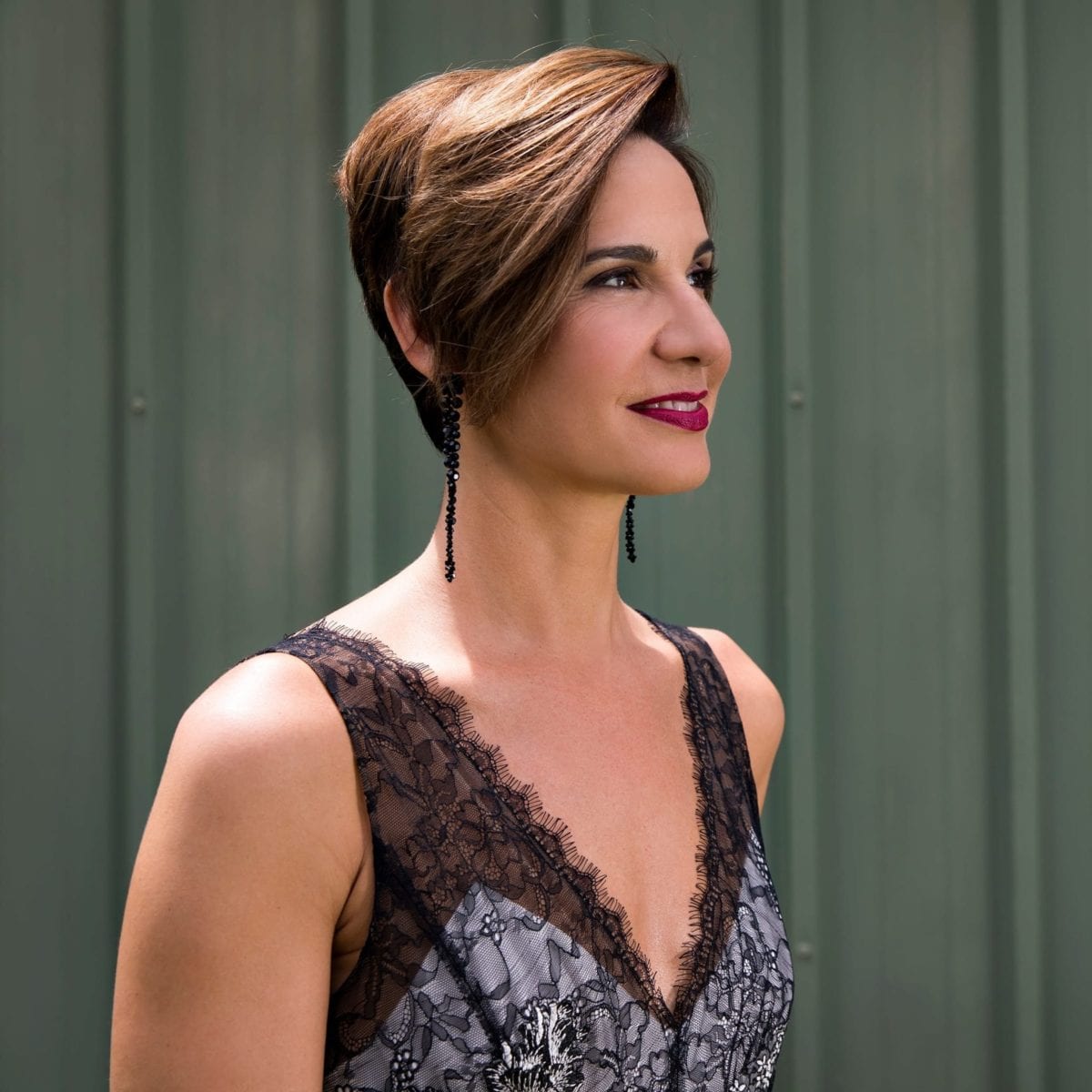
Kelley O’Connor was the soloist in Peter Lieberson’s Neruda Songs Saturday night.
A deep well of string tone formed the prelude to “And now your mind, Rest with your dream in my dream.” With O’Connor’s declamation bold and incisive. “My love, if I die and you don’t” treats death with a sense of calm and flowing grace. O’Connor’s formidable interpretive gifts were fully on display, imbuing this farewell with poignancy. Her voice blended with the winds to hypnotic and memorable effect.
O’Connor and Denève received an enthusiastic ovation, many audience members standing at the piece’s quiet conclusion. The conductor held up the score and pointed to the composer’s name on the front page, drawing cheers. Indeed, the work is an inspired mix of poetry and music and was fully served in this superb performance.
Ravel’s Daphnis et Chloé was the first commission by impresario Serge Diaghilev for his Ballets Russes by a composer outside his Russian circle. While the second suite from the 1912 opus has become a repertoire staple, the full composition is infrequently programmed. That original version includes a prominent choral part. Denève presented the full 55-minute ballet score as Ravel conceived it.
Occupying the Arsht’s choral risers above the orchestra, the Master Chorale of South Florida once again demonstrated what a terrific job director Brett Karlin has done in honing the group into a tightly unified, responsive ensemble. After the opening silvery flute solo and luminous string figurations, the chorus’ entrance emerged full and balanced, clearly heard over the full orchestral panoply.
Denève brought out every nuance of Ravel’s panoramic sound pictures while maintaining forward thrust. His unerring sense of balance and control aided in blending the singers with the orchestra, and bringing out the chorus’s precision. The music really gains greatly in impact when heard with the full vocal context.
The “Danse génerale” section was conveyed in crisp and nimble rhythms. “Danse grotesque de Dorcon” and “Danse guerriè” illustrate just how original and modern Ravel’s score was at the time of its premiere. More than a suggestion of Kastchei’s infernal dance from Stravinsky’s The Firebird (written two years previously) crests through these movements and the clipped phrases were assayed with appropriately harsh, raucous abandon. Amid the outstanding ensemble effort, two harps provided undercurrent to the glistening soundscape while a wind machine added atmosphere and the burnished violas’ tonal glow stood out. First chair solos were consistently excellent across the board with special honors for the sweet and vivid violin interludes.
Part III of the ballet comprises the familiar, oft played suite but there was nothing hackneyed or routine in Denève’s reading. Emphasizing individual timbres and textures that often go obscured in less studious iterations, his leadership was both exciting and insightful. Taking a brisk tempo for the concluding “Bacchanale,” Denève’s propulsion brought an exciting climax to a well-rehearsed and conceived performance. The chorus’ final outburst put an exclamation point on a special opportunity to hear an impressionist classic in its original form.
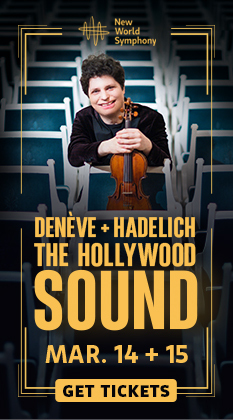
Stéphane Denève conducts the New World Symphony in Strauss’ Also sprach Zarathustra, Max Steiner’s Main theme from King Kong and Erich Wolfgang Korngold’s Overture from The Sea Hawk and Violin Concerto with Augustin Hadelich. Concerts are 7:30 p.m. March 14 and 2 p.m. March 15 at the New World Center in Miami Beach. nws.edu
Posted in Performances
Leave a Comment
Sun Mar 8, 2026
at 12:36 pm
No Comments

 Subscribe via RSS.